When people begin Pilates, they often expect to notice changes during their time in the studio. They anticipate becoming stronger, more flexible, or more familiar with the movements and equipment. These changes certainly happen, but what often surprises people most are the changes that begin appearing in everyday life.
One day, you may realize that carrying groceries feels easier than it once did. You bend down to pick something up without automatically thinking about your back. You catch your reflection and notice yourself standing a little taller. You walk up a flight of stairs and realize you did not feel as tired or uncomfortable as you expected.
The most meaningful transformations from Pilates often happen quietly and in ordinary moments.
Pilates was never designed simply to create a workout. Its purpose is to help the body move more efficiently and support the way we live every day.
Your Body Learns to Support You Again
Modern life places significant demands on our bodies. Many of us spend long hours sitting at desks, driving between commitments, working on computers, carrying bags, managing households, or constantly moving from one responsibility to the next.
Over time, the body begins adapting to these repetitive habits and positions. Shoulders may gradually roll forward, hips can become tighter, posture changes, and certain muscles begin compensating for others that are no longer functioning as effectively.
These adaptations can show up in ways that feel very familiar:
Neck and shoulder tension becomes more frequent. Stiffness develops through the hips and lower back. Daily movements begin feeling more difficult, and overall energy levels may seem lower than before.
Many people assume these changes are simply part of aging.
In many cases, however, the body is not necessarily becoming weaker. It is simply adapting to movement patterns that no longer serve it well.
Pilates Trains the Body to Work Together
One of the things that makes Pilates different from many forms of exercise is its focus on how the body functions as a whole system.
Rather than isolating one muscle group at a time, Pilates teaches different parts of the body to work together in a more balanced and coordinated way.
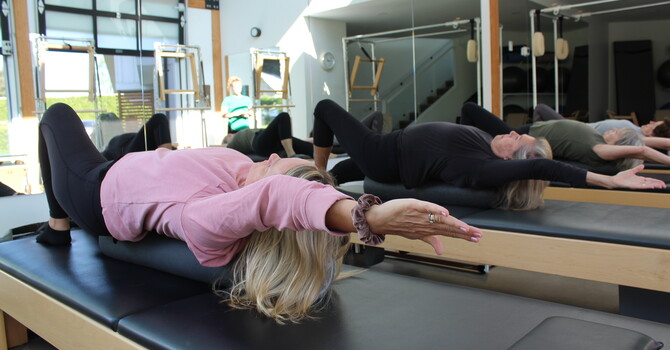
During a Pilates session, you are not simply strengthening your arms, legs, or core independently. You are learning how your core supports your spine, how your hips create stability, how your feet contribute to balance, and how posture influences breathing and movement throughout the body.
The goal extends beyond building stronger muscles.
The goal is to create healthier movement patterns that support you in daily life.
Small Movements Often Create the Biggest Changes
One of the most common things instructors hear from new clients is surprise at how effective Pilates can feel.
Many people initially expect intensity to come from fast movements, heavy weights, or leaving a workout feeling exhausted. Pilates approaches movement differently.
The method emphasizes precision rather than intensity. Small movements performed with control and awareness can create meaningful changes within the body over time.
A subtle adjustment in posture may improve how your shoulders feel throughout the day. Greater awareness of core engagement can reduce strain on the lower back. Improved balance and stability can make everyday movement feel more natural and comfortable.
These changes often begin with very small movements, but over time they become habits that influence the way we stand, walk, sit, breathe, and move.
The Everyday Victories Matter Most
We often think progress must look dramatic in order to be meaningful. We associate success with visible changes, heavier weights, or reaching specific fitness goals.
However, many of the most important victories are far quieter.
Progress may look like getting through an entire day without feeling stiff. It may be carrying your child or grandchild with greater ease. It may be standing taller, moving more confidently, or simply feeling more comfortable in your own body.
These moments matter because they affect how we experience daily life.
They represent a body that is supporting us rather than working against us.
Pilates Is Not About Becoming Someone Else
Pilates is not about becoming more athletic, more flexible, or transforming yourself into someone entirely different.
Instead, it is about reconnecting with the body you already have and helping it function in a way that feels stronger, healthier, and more supportive.
Over time, Pilates becomes less about the hour you spend in the studio and more about how you feel during the other twenty-three hours of the day.
When your body begins supporting you more effectively, everyday life starts to feel different.
That is where the most meaningful transformation begins
Karen Voogt
Contact Me